


Updated on November 06, 2026
Work-life balance in nursing refers to the ability of nurses to effectively manage their professional responsibilities and personal commitments, ensuring they have time for self-care, family, and other leisure activities outside of work.
However, achieving work-life balance in nursing is difficult because many of the barriers are built into the job. Twelve-hour shifts can stretch to thirteen or fourteen. Mandatory overtime can happen when a colleague calls out. Even on a day off, it can be hard to turn off the on-call mindset. Balance can feel even harder in a culture that has often rewarded sacrifice more than sustainability.
That is why work-life balance for nurses needs practical solutions. This guide looks at what nurses say genuinely helps, including better schedules, real recovery time, stronger boundaries between work and home, and knowing when the conditions around you need to change.
None of these changes is easy. Some require asking for things that may feel uncomfortable to ask for. But they are worth trying if you want a nursing career that is healthier and more sustainable.
Table of Contents
Why is Work-Life Balance So Important for Nurses?
Work-life balance in nursing is essential for numerous reasons. First and foremost, nursing is a high-stress profession that can take a toll on a nurse’s physical and emotional well-being. Without adequate time for self-care and personal pursuits, nurses can become burnt out, leading to decreased job satisfaction, increased medical errors, and even early retirement.
Moreover, nurses often work long hours, irregular shifts, and holidays, making maintaining a healthy work-life balance challenging. A balanced lifestyle is crucial to staying motivated and energized, which can improve patient care and job performance.
Finally, work-life balance is vital for nurses’ personal lives, as it allows them to spend quality time with family and friends, pursue hobbies, and maintain a healthy lifestyle outside of work. By achieving a healthy balance, nurses can lead fulfilling and meaningful lives inside and outside the workplace.
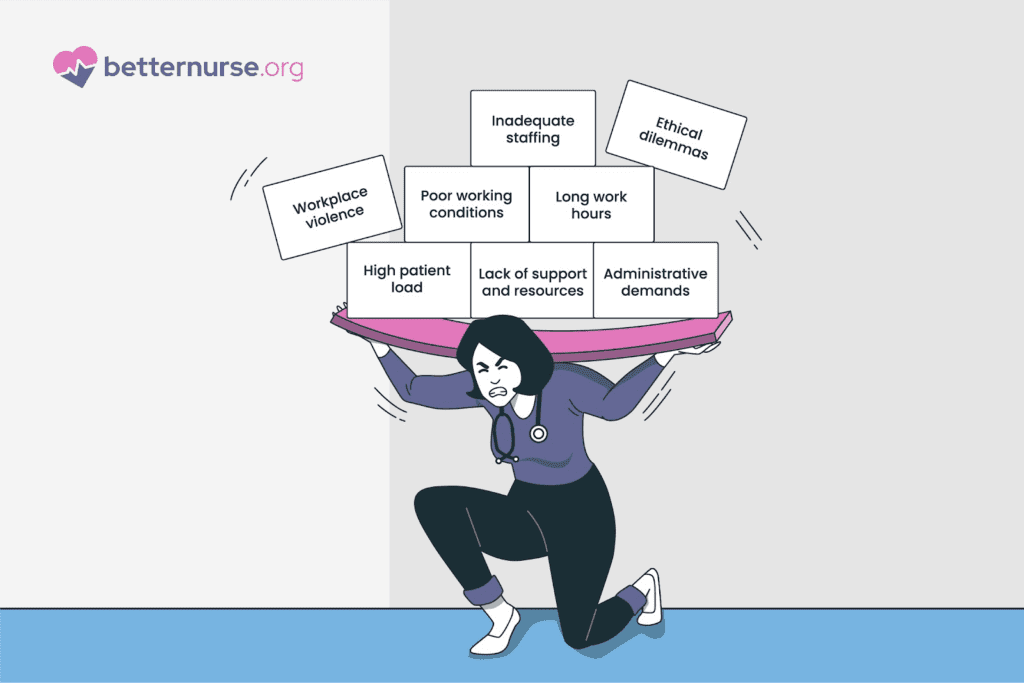
What Are the Causes of Stress for Nurses?
Nurses face numerous causes of stress in their profession, including:
- High patient load
- Long work hours
- Workplace violence
- Lack of support and resources
- Poor working conditions
- Inadequate staffing
- Administrative demands
- Ethical dilemmas
The constant demand for decision-making, multitasking, and adapting to changing patient needs can also contribute to nurse stress. Additionally, nurses often face emotional challenges, such as dealing with death and grieving families, which can be emotionally taxing. These factors can lead to burnout, exhaustion, and poor mental health outcomes.
Strategies to Achieve Work-Life Balance
Nurses can use several effective strategies to prioritize self-care, set boundaries, and seek support to achieve a balanced lifestyle, reduce stress, and improve job performance.
Nursing Schedules You Can and Cannot Negotiate
Your schedule is often the first place where work-life balance is either supported or strained. It may not be fully flexible, but many nurses have more room to negotiate than they realize. Self-scheduling, when available, is one of the most effective tools for balancing in nursing. It allows nurses to plan work around fixed commitments instead of reshaping their entire lives around each month’s schedule. This can support better satisfaction and reduce burnout.
If your unit does not offer self-scheduling, consider raising it through shared governance or a management conversation when appropriate. Block scheduling is another option many nurses prefer. This means working several shifts in a row and then taking several days off. Working three 12-hour shifts followed by four days off can give you a longer recovery window than the same three shifts scattered across the week.
Overtime expectations also deserve a direct conversation. Some nurses assume every request is mandatory, even when some overtime is voluntary. Ask your manager what is required, what is optional, and how to communicate your limits professionally. In most workplaces, this is a normal conversation experienced nurses learn to have.
Otherwise, practice time management. Effective time management requires discipline, planning, and a willingness to adapt to changing circumstances. One way to improve time management is by creating a schedule or to-do list that outlines daily, weekly, or monthly tasks.
Setting realistic goals and deadlines ensures you are not overcommitting or underestimating the time required to complete tasks. When setting these goals, it’s important to make them specific, measurable, achievable, relevant, and time-bound (SMART). By setting SMART goals, you can create a roadmap for success that aligns with your priorities and helps you maintain a healthy balance between work and personal life.
For example, a SMART goal for a nurse could be to exercise for 30 minutes every day for the next month to improve physical fitness and reduce stress. Eliminating distractions such as social media or unnecessary work-hour meetings can also help you manage your time more efficiently.
Lastly, don’t forget to ask for help. Asking for help means you recognize your limits and are willing to seek support from colleagues, friends, or family members when needed. This can mean delegating tasks to coworkers, seeking advice or guidance from your mentor, especially if you’re floating to another hospital unit, or relying on friends and family members for emotional support or assistance with household tasks.
The important thing is to communicate your needs clearly and ask for help rather than do everything independently. Not only can this help you build stronger relationships with your colleagues, but it can also enhance your job performance and career advancement.
Psychological Detachment and Leaving Work at Work
Many nurses find it difficult to mentally switch off after a shift. Even after leaving the unit, it is common to replay difficult patient interactions, stressful conversations, or moments that felt unsafe. This pattern is called rumination, and it can make recovery harder during time off.
Psychological detachment means being able to mentally disconnect from work during your time away from the job. It is one of the strongest predictors of recovery and long-term well-being. Nurses who can leave work behind often report lower burnout, better sleep, and stronger relationships.
The strategies that help are more concrete than “try to relax.” A short transition ritual between work and home can signal that the workday is ending. This might mean changing out of scrubs right away, taking a quick walk, or playing one specific playlist on the commute. Over time, these habits can help create a mental boundary between work and home.
Limiting work communication during off-hours is also important. By setting your boundaries, you define clear limits on the time, energy, and resources that you devote to work and other life aspects. Checking the scheduling app, reading work messages, or answering the unit group text on a day off can keep you mentally tied to work. Setting specific times to check work messages, instead of staying continuously reachable, can reduce the feeling of being always on call.
Recovery Days and What Real Recovery Requires
For most nurses, the first day off after several shifts is often a logistics day, not a true recovery day. It can be filled with errands, laundry, appointments, and family obligations that piled up while you were working. Real recovery may not happen until day two or three. That matters when planning your days off. On a three-on, four-off schedule, expecting four full recovery days is usually unrealistic. One day may go to logistics, one to real rest, and two to living your life.
The problem begins when every day off becomes either logistics or lingering exhaustion, with no real recovery built in. Active recovery means choosing activities that help restore your body and mind. Exercise is one of the best-supported options because it can improve sleep, lower stress, and lift mood in a way passive rest may not. Social connection with people outside nursing also matters because these relationships can give you perspective and support that peer friendships may not fully replace.
Sleep is another important part of recovery on days off. The urge to catch up on life by staying up late and waking early on the first day off is understandable, but it can work against recovery. Keeping your sleep schedule within an hour or two of your shift schedule generally supports better sleep quality than swinging widely between workdays and off days.
Also, invest in your self-care to help you better cope with the demands of your job and maintain a better work-life balance. It involves prioritizing your physical, emotional, and mental well-being and taking proactive steps to maintain it. Some ways to invest in self-care apart from those mentioned above include:
- Eating a healthy diet
- Practicing mindfulness or meditation
- Finding activities or hobbies that help you unwind after work (cooking, gardening, painting, joining a club, or reading a good book)
Managing Relationships and Family Around Nursing Shift Work
Nursing schedules can be hard for partners, kids, and friends to understand. Missing weekends, holidays, and evening events often comes with the job. Because of that, relationships outside work usually need more planning and clearer communication.
Healthy relationships during a nursing career often depend on setting aside time for the people who matter most. Instead of waiting until you have free time, schedule regular time with a partner, your kids, or a close friend. It may fall on a Tuesday morning, a Sunday evening, or another unusual time. What matters is that it happens consistently enough for the people in your life to count on it.
Recovery time also needs to be communicated clearly. Many nurses hesitate to tell family what they need after a stretch of shifts, but clear expectations can prevent frustration on both sides. Saying, “After a stretch of night shifts, I need four uninterrupted hours of sleep before I’m available,” helps your family understand what you need and makes it easier for you to be present afterward.
For nurses with children, consistency matters more than a perfect schedule. Kids may notice missed events or unusual work hours, but they can also feel proud of what their nurse parent does. Research suggests that quality time together and clear explanations about a nurse parent’s schedule can matter more than having a perfectly predictable routine.
Frequently Asked Questions About Work-Life Balance in Nursing
Yes, but it usually requires some control over scheduling, protected recovery time, support at home, and a workplace that doesn’t treat constant sacrifice as the norm. The balance may shift from week to week, but it should still leave enough room for sleep, relationships, and life outside work.
Build a clear end-of-shift ritual and limit work communication to defined windows. Choose an activity that requires your attention, such as exercise, time with friends, or a creative project, so your mind has somewhere else to go.
Check the written policy first, so you know what’s truly required. Then state your availability clearly and ask your manager to clarify the expectations. If informal pressure continues, document it and raise the issue with shared governance, your union, if you have one, or colleagues facing the same problem. Addressing the issue collectively is often more effective than trying to manage it alone.
They usually manage it with reliable childcare, family support, and clear planning. Childcare needs to account for schedule changes. Partners or family members need to understand the demands of the job. Household responsibilities also need to be divided clearly. Self-scheduling or consistent shift times can make childcare and family time easier to plan.
Building a Sustainable Nursing Career
Many work-life balance discussions focus on personal habits, but some challenges come from the workplace itself. Chronic understaffing that makes real breaks impossible, mandatory overtime that regularly extends 12-hour shifts, and unit cultures that discourage healthy boundaries are organizational problems, not personal ones.
Recognizing the difference matters. It helps you focus your energy on the changes you can make while identifying problems that require a workplace response. Raising concerns through shared governance, management, or other appropriate channels can be part of improving your work environment.
Sometimes, however, the workplace is unlikely to change in the near future. When that happens, exploring a different unit, employer, or nursing role may be the healthiest option.
As your schedule, responsibilities, and personal life change, your approach to work-life balance will also evolve. The goal is to build a sustainable way of working that supports your health, relationships, and long-term career.
For more ways to build a healthier nursing career, explore our guides to nurse self-care strategies that work and nurse burnout statistics and what they mean.


